

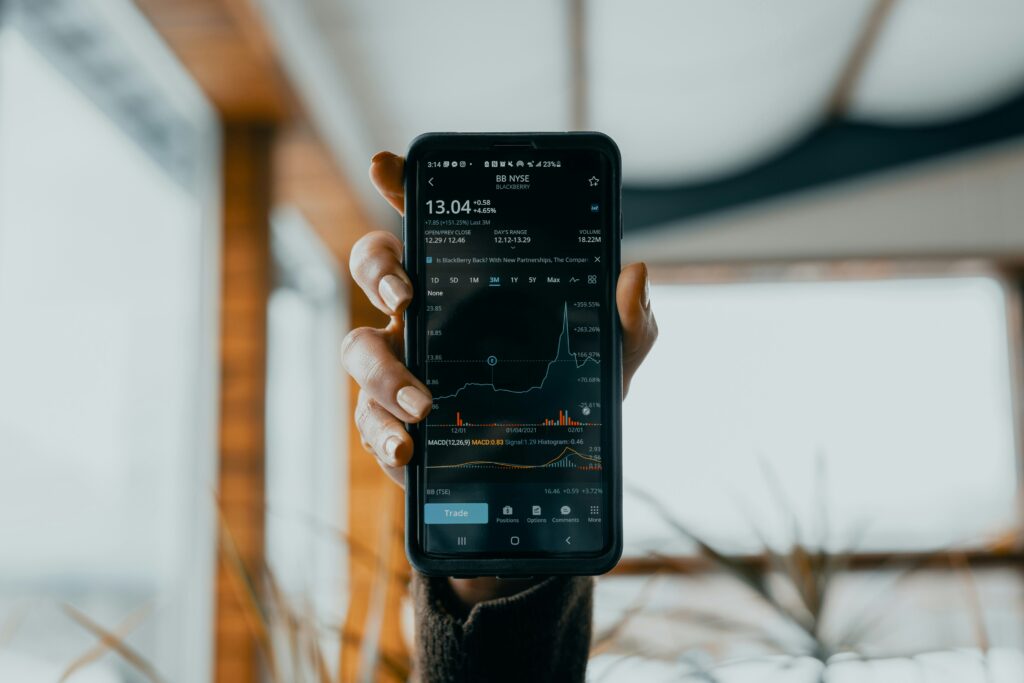
When markets feel uncertain, it’s human nature to want to pause or pull back. But stepping away from investing altogether could mean missing out on opportunities. In fact, continuing to invest—even when things feel shaky—is often one of the smartest long-term moves you can make.
Here’s why:
In early 2009, the stock market hit its lowest point in years.
The S&P 500 had dropped more than 50% from its peak, headlines warned of a global financial collapse, and even seasoned investors were bracing for impact. People were selling. People were scared.
And then—quietly at first—the market began to recover. It didn’t feel like optimism. It felt like survival. But those who stayed invested didn’t just make it through… they experienced one of the longest bull runs in history.
Market volatility isn’t just about crashes. It’s all movement: the upswings, the recoveries, the breakouts, and yes, sometimes the downturns, too. The emotions that come with it are real, especially when it feels like your wealth is on the line. At Hendershott Wealth Management®, we don’t downplay that. We plan for it.
Because the truth is: market volatility isn’t the enemy of long-term investing. Emotionally-driven decision-making is.
Sometimes it’s the surge of a bull run; other times, it’s a sharp drop that tests your resolve. But in both directions, volatility has the power to stir emotion and influence behavior—often in ways that can impact your long-term plan.
When investment markets feel steady, optimism is easy to find. But that confidence can backfire if it turns into inertia that leads investors to overlook the risk produced by a now outsized position, or assume recent performance will continue.
On the other hand, when markets are uncertain, headlines are unsettling, and portfolios dip, it’s human instinct to want to do something. But decisions driven by fear can lead investors to panic sell or worse: eschew stocks altogether. Both are expensive moves that potentially jeopardize their long-term wealth building efforts.
We work with investors at all stages of life, and what we’ve seen time and again is this: Every generation faces moments that feel unprecedented.
We’ve witnessed technological advances, the emergence of new industries, and massive wealth growth. We’ve also experienced the downturns from global pandemics, wars, tech crashes, and political upheaval.
Market cycles will keep happening—when you’re investing, that much is guaranteed. And. So far, every stock market cycle has resolved itself—so it isn’t the events we need to worry about, but rather the reaction we have to it.
Human emotion is a powerful driver of our decisions, and the media has always found a way to insert emotion into financial headlines–especially fear. Whether it’s fear of missing out or fear of losing it all, there is no shortage of conversation (and speculation) about quick wins, looming crashes, and the notion that this time is different.
But alongside that emotional rollercoaster, there’s another story. One that doesn’t make the news quite as often, but has shaped long-term investor outcomes for decades:
Markets recover.
Solutions emerge.
Human progress continues.
Choosing to remain invested in the stock market during times of volatility isn’t passive, nor is it just “riding it out.” It’s an active, strategic decision rooted in something far more powerful than predictions: belief in human ingenuity.
Consider This: Why Are You Invested in the First Place?
Let’s take a step back. Why do people invest in the stock market at all?
For many people, the honest answer to “Why am I invested?” is simple: because that’s what my 401(k) plan offers. Target-date funds, index funds, and diversified stock funds are the default in most workplace plans. These portfolios are made up of tiny slices of thousands of companies bundled together to spread risk.
This begs another question: Why are diversified funds the default for many corporate plans?
The short answer is because it works. Over the last 50 years, the S&P 500 has returned an average of over 12% annually, compared to 6.1% for 10-year Treasury Bonds and 5.4% for gold.
Those are compelling numbers. But as any compliance-minded financial advisor will tell you (and as we mention often ourselves):
Past performance doesn’t guarantee future results.
So the real questions to ask are: Why has the stock market done so well? And: What am I really investing in?
Because stock investing isn’t just about numbers. It’s about participating in—and profiting from—innovation.
Unlike bonds, which are a debt instrument, stocks represent ownership in businesses—real companies that are led by and hire real people. We’re talking about the entrepreneurs, scientists, engineers, and creatives who wake up every day to build things that make life better.
That’s the real engine that has kept the stock market running—and what you’re actually investing in—the long-term efforts of people solving problems and creating value.
As past Love, your Money® podcast guest Breanna Blaney put it:
“When you’re investing in the stock market… you’re really investing in human ingenuity. That’s inspiring and very optimistic. It’s what helps us create solutions—even in the hardest times.”
And the volatility we talked about earlier? It isn’t a flaw. It’s a feature.
Let’s try a reframe: Volatility is not a malfunction of the system. It’s a built-in part of investing in progress.
Stocks don’t promise steady returns, because innovation doesn’t follow a straight line. Ideas fail. Companies pivot. Global events create disruptions. And. Problems get solved. Productivity buoys. Diseases get cured. Humans find incredible and innovative ways to change the world every day, and the markets reflect the variable nature of that creative process.
When you invest in a globally diversified portfolio, you’re not placing a bet on a single company, product, or even industry. You’re participating in a vast, international marketplace of offerings and ideas—one that consistently rewards resilience and valuable solutions to problems.
Investors are compensated not because investing is easy, but because it demands patience and persistence–faith, even–in the face of uncertainty. It requires a long-term mindset, especially when fear dominates the headlines.
And the reward for staying the course? Participation in the rebound—because in over 100 years of stock market data, the market has gone up far more than it has gone down.
A Real-World Case Study: COVID-19 and the Market Drop of 2020
In early 2020, the stock market dropped more than 33% as COVID-19 spread worldwide. Panic was understandable—businesses were shuttered, hospitals were overwhelmed, and there was no vaccine in sight.
Yet behind the scenes, powerful things were happening:
- Scientists raced to develop tests, treatments, and vaccines in record time
- Businesses rapidly adapted—pivoting supply chains, shifting to remote work, and increasingly embracing technology that supported all these changes
- The entrepreneurial engine of the global economy didn’t shut down—it shifted gears
And by the end of 2021, the stock market had more than doubled from its March 2020 low.
People who stayed invested weren’t “lucky” because they managed to time their investments with an unprecedented global event. Rather, they were aligned with—and committed to—the long-term engine of human progress.
What Makes the Difference: The Resilience of a Diversified Portfolio
Even more recently, investors faced a new wave of uncertainty following the 2024 election. In the past year, we’ve seen the markets shift up and down based on uncertain tariff policies, legislative gridlock, a record-setting government shutdown, and concerns about inflation and global growth.
Markets have dropped. Markets have rebounded. Markets have dropped again. And markets have rebounded again.
Political cycles, media headlines, and pundit hot takes can make it feel like “the market” is a single, fragile entity that’s swayed by the news of the day—but it isn’t. The stock market is the real-time aggregation of millions of decisions about thousands of distinct businesses with their own customers, cash flows, and opportunities.
No one headline or article can fully capture what’s actually happening in the market.
Having operated Hendershott Wealth for over a decade, our team has seen clients through countless market cycles. What helps our clients ride those waves with confidence is more than our team’s counsel—it’s the proven resilience of their globally-diversified portfolios.
Our clients’ portfolios are made up of more than the S&P 500, or even the 3,500-4,000 publicly-traded American companies. Their investment portfolios include more than 12,000 companies worldwide, providing insulation from short-term geopolitical events affecting individual companies, countries, or industries.
In other words, a headline is a simplified narrative; your portfolio is a cross-section of enterprise.
Prices reflect billions of data points across thousands of businesses—long before any single article “explains” what happened. Confidence comes from knowing you own a slice of that broad, adaptive engine of innovation.
So while our domestic markets swung over the last year, our clients’ personal holdings were protected by diversification, with international stocks continuing to climb up over 17% YTD as of June 2025.
Diversification is how an evidence-based, intentionally-constructed portfolio weathers the storm—but a diversified portfolio, alone, won’t be what allows you, as an investor, to capitalize on the innovation engine that is the stock market.
The bigger idea to adopt is knowing that you’re invested in a dynamic ecosystem of problem solvers committed to creating value in the world. With that lens, you can breathe a little easier, knowing you’ve got:
- Less exposure to sector-specific risk,
- More opportunity to capture gains from international innovation,
- Reduced emotional decision-making during headline-driven dips,
…and confidence in your financial future.
Think You Can Predict the Stock Market? Think again.
Now that you better understand what investing in the stock market really means, it’s easier to see how little control any one of us has over it.
That’s contrary to what you might hear from the armchair investors out there who, more often than not, are just parroting something they read in the news.
Active approaches like stock picking or market timing aim to buy before prices rise and sell before they fall. There are endless ways to try it, but they’re all missing the same thing: reliable, repeatable, long-term evidence that most people can generate returns consistently and profitably after costs and taxes.
According to SPIVA research, the majority of professional stock-pickers struggle to beat simple index benchmarks: as of June 2025, 88.29% of U.S. large-cap funds underperformed the S&P 500 over the last 15 years (2010-2025)–and the minority that do outperform fail to maintain that momentum.
Here’s the thing: when markets experience volatility and stock prices fall, smart people who sell don’t think they’re day trading. They think they’re being prudent by moving to cash “until things settle,” rotating into commodities that feel safer, or waiting for a “better entry.” Those actions feel rational in the moment because they are in response to current events and real emotions.
But. They are still timing calls.
None of this means you must accept a “set it and forget it” posture, because staying the course is not the same as doing nothing—it’s executing a disciplined plan: diversifying broadly, rebalancing on schedule, and aligning risk with cash needs so you don’t have to make ad-hoc predictions under pressure.
You’ve heard it here before, and you’ll hear it again: There is no Wall Street Nostradamus.
If someone says they have a better solution or strategy or program to sell you that’s going to help you consistently beat market returns, ask them to prove that they’ve made money doing it.
At Hendershott Wealth, we don’t build portfolios around forecasts, we build them around process and evidence—and the evidence shows that diversified stock investors, over time, are rewarded for their consistent devotion to a market that is volatile, yes, but consistently rises more than it falls because it’s propped up by human innovation.
What the Market Offers Long-Term Investors Like You
Staying invested in a globally-diversified portfolio doesn’t mean closing your eyes and hoping for the best. It means looking clearly at what markets really are:
- A reflection of the progress of tens of thousands of companies across the globe
- A diversified portfolio of ideas, industries, and innovations
- A long-term engine fueled by creativity, courage, and human drive
We don’t invest in the stock market because the ride is smooth. We invest because progress happens, even through (or sometimes because of!) the bumps.
For most investors, your money should be where risk-adjusted expected returns are greatest—and that’s the stock market because it reflects the brilliance and grit of problem-solving humans everywhere.
Entrepreneurs don’t stop innovating. Scientists don’t stop discovering. And markets—over time—don’t stop growing.
Nobody can predict tomorrow’s headlines or stock fluctuations, but we know where we’re placing our bets—not on the doomsayers, but on the innovators.
Here’s what we remind our clients when uncertainty creeps in:
True wealth isn’t just about money. It’s about your ability to stay grounded, steady, and aligned with your long-term goals—even when the future feels murky.
And that’s what we’re here to help you do.
Our team at Hendershott Wealth offers goals-based, comprehensive, evidence-backed financial advice that enables you (and the people you love) to step into true financial freedom with confidence and peace of mind.
And we build resilient portfolios that will give you the confidence to ignore the headlines and know that your wealth is working for you.
If you’re feeling uneasy about current market swings or want a second look at how your portfolio is positioned, we’re here to talk. No pressure. Just thoughtful, evidence-based advice rooted in your goals.
Let’s make sure your wealth continues to support not just your life today—but your belief in what’s possible tomorrow.
Resources
Disclaimer:
All investing involves risk, including the potential loss of principal. There is no guarantee that any investment plan or strategy will be successful. Advisory services provided by Hendershott Wealth Management, LLC (“HWM”), an investment advisor registered with the U.S. Securities and Exchange Commission. Registration does not imply a certain level of skill or training.
All written content in this article is for information purposes only and does not constitute an offer, or solicitation of an offer, or any advice, or recommendation to purchase any securities or other financial instruments–and may not be construed as such. Opinions expressed herein are solely those of HWM, unless otherwise specifically cited. Material presented is believed to be from reliable sources and no representations are made by our firm as to another parties’ informational accuracy or completeness. All information or ideas provided should be discussed in detail with an advisor, accountant or legal counsel prior to implementation.

